


What Marketing Automation Replaces

Marketing automation replaces the follow-up you already intend to do but rarely have time for. It sends the reminders, check-ins, and review requests on schedule, so leads don't go cold while you're on a job. It doesn't replace you, your offer, or the conversation that closes the sale. We set it up the same way for a shop near us in Dallas as for one across the country.
Here's the plain version: automation doesn't add new work to your business. It takes over the work that's already supposed to happen and usually doesn't.
Think about the last estimate you sent. Did someone follow up two days later? A week later? Most owners mean to. Then a crew calls in sick, a client has a problem, and the follow-up sits on a sticky note until it doesn't matter anymore.
That's the gap automation fills. Here's what it typically takes off your desk:
-
The text you forget to send after a missed call, so the caller doesn't move on to the next name on the list.
-
Estimate follow-ups, sent on a set schedule instead of whenever someone remembers.
-
Appointment reminders, so fewer people forget you're coming.
-
Review requests after a finished job, sent while the customer still feels good about the work.
-
Check-ins with past customers who haven't heard from you in a year, even though they'd hire you again.
None of that is fancy. It's the stuff a great office manager does on a good day. The difference is that the system does it on the bad days too.
Most local businesses don't lose leads because their work is bad. They lose them in the quiet stretch between the first call and the second touch. Someone was interested, nobody followed up, and a competitor did.
There's a second job automation does that owners don't always notice. Every message is a signal. A review request leads to a fresh review on your Google Business Profile. A check-in email sends someone back to your website. When those signals point at each other, your business looks active and trusted, both to customers and to the search tools that decide who shows up.
Now the tradeoff, because there is one. The honest cost is setup time. Someone has to write messages that sound like you, decide when each one goes out, and test them before real customers see them. Badly set-up automation is worse than none. A canned text that reads like a robot can cost you the job it was meant to save.
And here's the ceiling. Automation can only follow up with people who already found you. It won't create demand where there isn't any. If your phone isn't ringing, the fix starts with being found, not with better reminders. That's why we layer email and SMS on top of a working search foundation, not in place of one.
It also won't replace the person who picks up the phone. When a lead is ready to talk, they want a human. Automation's job is to get them to that moment, then get out of the way.
Marketing automation connects the work of our marketing agency services in Dallas.
Signs Your Business Needs This Now
You don't need automation because a competitor has it. You need it when you can see leads slipping and you know why. Here's what that usually looks like from the owner's chair.
-
You scroll back through your texts or inbox and find estimates you sent weeks ago. You can't say if anyone followed up.
-
Your reviews come in bursts. A few land after a good month, then nothing for a long stretch. Anyone checking your Google Business Profile sees a business that looks quiet, even when you're slammed.
-
Your follow-up lives in one person's head. When your office manager takes a week off, the callbacks stop.
-
You only do marketing when work gets slow. By the time you notice, the slow stretch is already here.
-
You have a list of past customers you've never contacted since the job ended. They liked you. They just forgot your name.
-
Calls and form requests come in after hours, and nobody answers until the next morning or later.
If two or three of those sound familiar, the problem probably isn't your work or your prices. It's the gap between interest and the next touch. That gap is exactly what automation closes.
Here's a quick test you can run this week. Pull your estimates from the last month. Next to each one, write down whether it got a second touch, and when. Most owners are surprised by how many got nothing at all. Each blank line is a job someone else may have closed.
There's a quieter sign too. Your website, your profile, and your social pages don't point at each other. Your site says one thing, your profile hasn't been touched in months, and your last post is from who knows when. Those signals should back each other up. When they don't, customers and search tools both read your business as less active than it really is.
Now the other side, because it matters just as much. Sometimes the right answer is to wait.
-
Your phone barely rings. Automation only follows up with people who already found you. Fix how people find you first.
-
You get a handful of leads a month and you personally call every one back the same day. That's already working. Keep doing it.
-
Your offer is still changing. If your services or pricing shift every few weeks, you'll be rewriting messages constantly. Settle the offer, then automate it.
-
Nobody on your team has an hour to review messages before they go live. Automation set up in a rush can sound like a robot, and that costs more than it saves.
The tradeoff with waiting is simple. Every month without a system, some leads go cold. The tradeoff with rushing is worse: a messy setup that turns people off. The best time to start is when leads are coming in steadily and you can feel them slipping through the cracks. That's when a little setup time pays back the most.
When Your Business Is Not Ready for Marketing Automation Yet
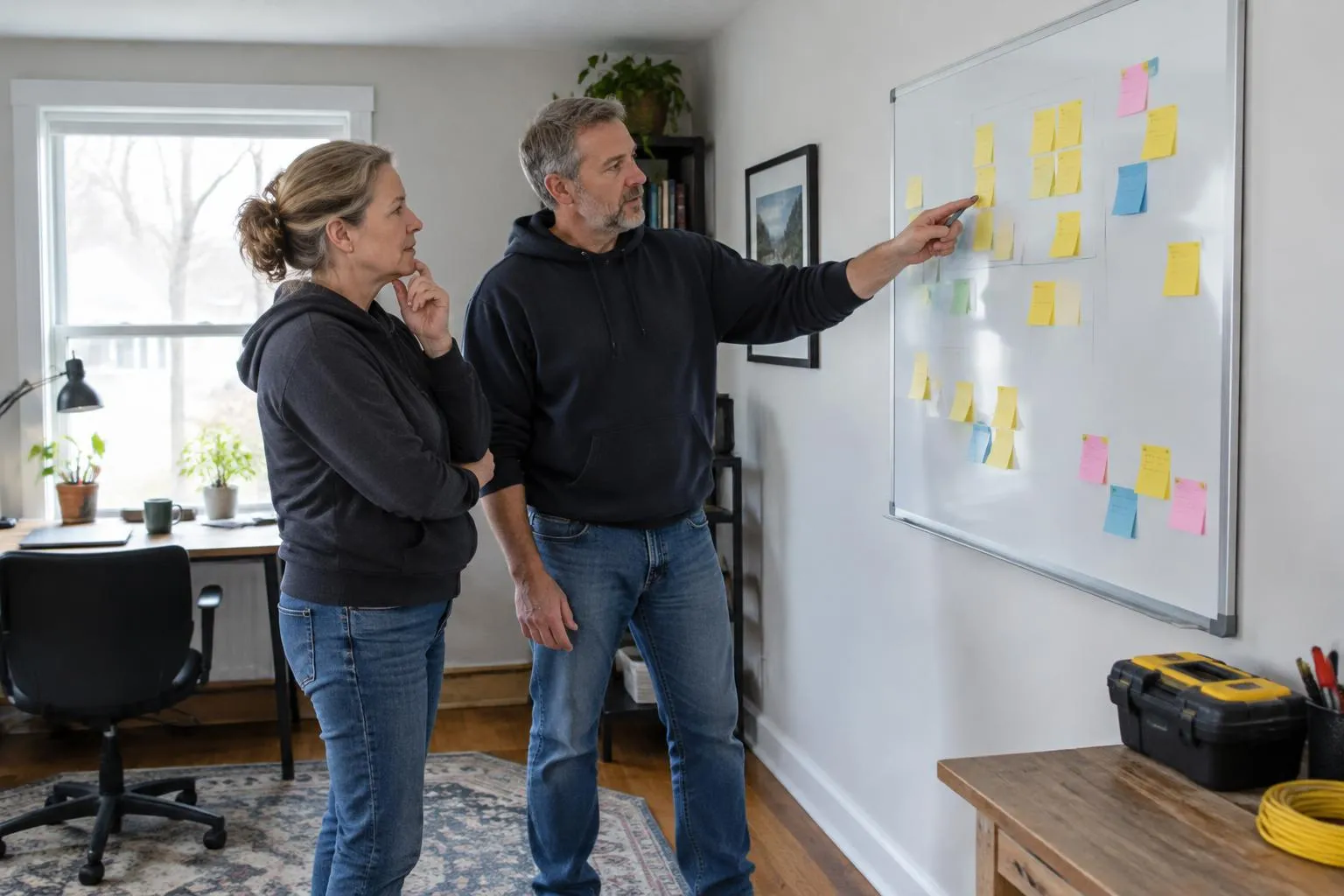
The section above covered the obvious reasons to wait: a quiet phone, a changing offer, no time to check messages. There are a few less obvious ones. They're worth checking before you spend a dollar on setup.
Here's the rule we go by: automate what already works. If you can't describe your follow-up when you do it by hand, a system can't run it for you.
-
Your customer info is scattered. Names live in your phone, your inbox, a spreadsheet, and old invoices. Automation needs one clean list to work from. If half the numbers are wrong or listed twice, the system will text the wrong people, or the same person three times. Clean the list first. It's boring work, and it's the work that makes everything after it run.
-
You don't have permission to text people. Marketing texts come with rules, and those rules center on whether the customer agreed to hear from you. If your list is numbers you collected without asking, you're not ready to send marketing texts to them. Start asking for permission on every new job and let the list build.
-
You've never followed up by hand on purpose. If there's no set pattern, like a call two days after an estimate and a text a week later, there's nothing to copy. Run it by hand for a month. You'll learn what customers answer and what they ignore. Those notes become your messages.
-
Your website or profile sends people to a dead end. A check-in email that links to a broken page works against you. So does a review request that points to a profile with the wrong hours. The message earns the click, then the business loses it. Fix the place the signal points before you send more people there.
-
The tools you already pay for may cover it. Many scheduling and invoicing tools can send reminders and simple follow-ups. If yours can and you've never turned that on, start there. It might be all you need for now.
The tradeoff of waiting is real but small. You may lose a few leads while you fix these things. The tradeoff of skipping them is bigger. A system built on a messy list or a broken page doesn't fail quietly. It sends bad signals with your name on them, over and over.
None of this is hard. Most owners can handle the list cleanup, the permission habit, and the hand follow-up test on their own. You don't need an agency for that part. You need a few focused hours and a willingness to be honest about what your notes show.
Once those pieces are in place, automation has something solid to stand on. Until then, the smart move is getting the basics right yourself.
Get My Free Audit. Monstera Marketing Agency is ready to help.
Why the Website and Google Business Profile Come First
Your Business
Hi, this is Your Business. Just confirming your visit tomorrow at 9:00 AM.
Yes, that works. Thank you!
Great. We will text when we are on the way.
Every automated message ends in one of two places. Someone clicks a link, or someone searches your name. Either way, they land on your website or your Google Business Profile. Those two places decide whether the message turns into a job.
Here's what that looks like from the customer's side. A past client gets your check-in email. She doesn't click the link. She types your business name into her phone instead, because that's what people do. Now she's looking at your profile and your site side by side, and she's deciding whether you're still the company she remembers.
If your profile lists five services and your site only talks about two, she notices. Maybe not consciously, but something feels off. The same goes when your hours or your service area don't match from one place to the other.
Search tools notice too. Google reads both. So do the AI assistants people now ask for recommendations, like Claude, ChatGPT, Perplexity, and Google's AI Overviews. When your site and your profile tell the same story, those tools can describe your business with confidence. When they disagree, the tools hedge, or they recommend someone whose story is clearer.
Most local businesses never connect these two things. One person built the website years ago. Someone else set up the profile. Nobody ever checked whether they agree. This is where most agencies stop short. They tune one and leave the other alone.
That's the problem the Monstera Method was built to fix. We treat the site and the profile as one system. Here's how it works:
-
Your service pages mirror your Google Business Profile exactly, so every service you list has a real page behind it.
-
We build depth around what you do before we expand into the cities you serve. The fix is depth, not a page for every town.
-
We add behind-the-scenes code that spells out who you are and what you offer, in the format AI assistants read.
-
Pages are written around what customers are really trying to figure out, not around whatever keyword gets the most searches.
Once that foundation holds, we layer in email and SMS, then social, then paid ads if they make sense. Each layer sends people back to a place that's ready for them. Ads amplify a working system. They don't replace one. The same is true for automation.
Now the tradeoff. This order is slower. If you came in wanting reminder texts running next week, hearing that we'll start with your service pages can feel like a detour. The honest cost is time, not scope. You aren't paying for extra work. You're paying for the work to happen in the right order.
There's a limit to this claim, too. A clean, matched foundation doesn't guarantee a ranking or a set number of calls. Nobody can promise that, and anyone who does is guessing. What it does is make sure every message your automation sends lands somewhere that backs it up instead of undercutting it.
Skip this step and automation still runs. It just keeps sending good people to a story that doesn't add up.
What Setting Up Marketing Automation Involves
Setup isn't buying software and flipping a switch. Most of the work is deciding what gets said, when it gets said, and when the system should go quiet. The tech part is usually the smallest piece.
This assumes the groundwork from earlier is already done: a clean list, permission to text, and a follow-up pattern you've tested by hand. From there, setup usually runs in this order:
-
Map the moments. Pick the few points where leads slip today. That's usually a missed call, an estimate sent, a finished job, and a past customer you haven't talked to in a year. Start with two or three, not ten.
-
Write the messages in your voice. Each one should sound like something you'd text yourself. Short, plain, and specific to the job. If it reads like a form letter, rewrite it.
-
Set the timing. Decide how long after each moment a message goes out, and how many follow it. A text an hour after a missed call makes sense. A text every day for a week doesn't.
-
Set the stop rules. This is the step people skip. The moment a customer replies, books, or pays, the reminders should stop. Nothing makes a business look careless faster than asking someone to book after they already did.
-
Connect it to what you already use. The system needs to know when a call was missed, an estimate went out, or a job closed. That means linking it to your phone, your forms, and your scheduling or invoicing tools.
-
Test it on yourself. Run every message to your own phone and inbox first. Click every link. Make sure it lands on the right page.
Then you go live small. Turn on one or two flows, let them run for a few weeks, and watch what happens. Which texts get replies? Which ones get ignored? Which link gets clicked and which page loses people?
That review never fully ends. Your services change. Your busy season shifts. A message that worked last spring can feel stale by fall. Plan on a short check-in with the system every month or so, the same way you'd check in with a new hire.
Here's the tradeoff. The heaviest lift is your time during the writing and testing stage. Nobody knows how you talk to customers better than you do, so you'll need to read and approve every message. Hand that off completely and you get a system that sounds like someone else's business.
And here's the ceiling. A well-built setup makes sure nobody falls through the cracks. It can't make a cold lead warm or a bad fit a good one. It gets the right message to the right person at the right time. What happens after they pick up the phone is still up to you.
Done right, it should feel boring from your side. Messages go out. Reviews come in. Past customers call back. Every one of those is a signal pointing back to your site and your profile, and you didn't have to remember to send any of them.
Based in Dallas, working with service businesses across the US, Canada, and beyond.